- 리뷰
- 리스트
- 구매
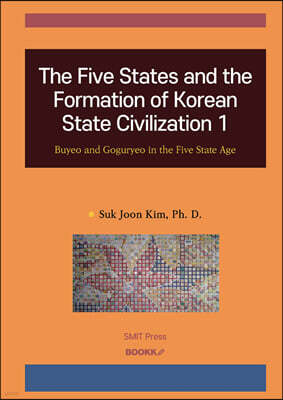
The Five States and Korean State Civilization 1
- 글쓴이
- Suk Joon Kim 저
- 출판사
- BOOKK(부크크)
- 출판일
- 2026년 10월 15일
읽고있어요
다 읽었어요
읽고싶어요
책 소개
분야사회 정치
Preface
Five States, Many Paths, One Enduring Civilization
This book began with a simple but important question:
How did Buyeo, Goguryeo, Baekje, Silla, and the Gaya states create different forms of state and administration, and how did their institutions together shape the later history of Korea and Northeast Asia?
The usual history of ancient Korea is often written as a sequence of kingdoms, wars, and territorial changes. Buyeo appears briefly as an early northern predecessor. Goguryeo is remembered for military strength. Baekje is praised for refined culture and relations with the Japanese archipelago. Silla is presented as the kingdom that achieved unification. Gaya is frequently treated as an unfinished confederacy that failed to become a centralized state.
These descriptions contain elements of truth. They are not sufficient. Buyeo was more than a predecessor. Goguryeo was more than a military kingdom. Baekje was more than a transmitter of culture. Silla was more than the political victor. Gaya was more than an incomplete confederacy.
Each possessed a distinctive political order. Each developed institutions for governing elites, territories, productive communities, armies, religious organizations, and external relations. Each responded differently to geography, war, migration, trade, technological change, and the pressure of surrounding powers.
They should therefore be studied not merely as dynasties, but as states and administrative civilizations.
1. Why This Book Was Written
Ancient states are often examined through kings, succession, military campaigns, and foreign relations. These subjects remain essential. Yet a state cannot survive through kings and battles alone. It must obtain grain. It must mobilize labor. It must communicate with distant regions. It must appoint or negotiate with local leaders. It must maintain roads, fortresses, ports, storehouses, workshops, and ritual centers. It must educate officials and specialists. It must protect or discipline households. It must respond to famine, migration, rebellion, invasion, and dynastic crisis. It must create enough legitimacy that people obey even when the ruler is not physically present. These activities belong to the history of administration and public policy.
The Five States possessed no modern bureaucratic ministries, national budgets, or representative legislatures. Nevertheless, they identified collective problems, allocated resources, regulated status, organized military service, supported agriculture, constructed infrastructure, managed diplomacy, and transmitted knowledge. The absence of modern administrative forms does not mean the absence of administration.
One purpose of this book is therefore to recover the administrative history hidden beneath dynastic narratives.
A second purpose is to explain why the Five States developed differently. Their differences were not accidental.
Buyeo’s broad northern environment encouraged a monarchy dependent on powerful regional g
전체 리뷰 (0)
최근 작성 순