- 리뷰
- 리스트
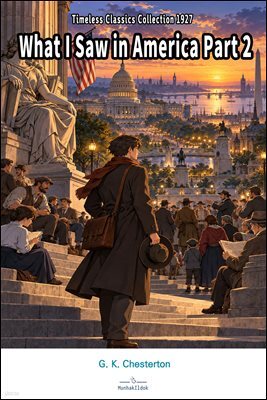
[eBook] What I Saw in America Part 2
- 글쓴이
- G. K. Chesterton 저
- 출판사
- 문학일독
- 출판일
- 2026년 10월 30일
읽고있어요
다 읽었어요
읽고싶어요
책 소개
분야소설
Continuing his reflections on American society, Chesterton examines popular fashions, public opinion, political ideals, and historical memory while questioning the principles upon which genuine democracy must rest. Through discussions of Abraham Lincoln, proposals for a world state, and the relationship between Britain and America, he argues that national progress cannot be measured merely by economic prosperity or the expansion of political institutions. Revisiting the ideals of equality expressed in the American Declaration of Independence, he warns that concentrated power and intellectual conformity may undermine individual liberty and the values of ordinary communities. His comparison of the American and English spirits ultimately leads to a profound reflection on democracy's future, suggesting that its survival depends not on material achievement or political slogans but on human dignity, freedom, and respect for ordinary citizens.
전체 리뷰 (0)
최근 작성 순