- 리뷰
- 리스트
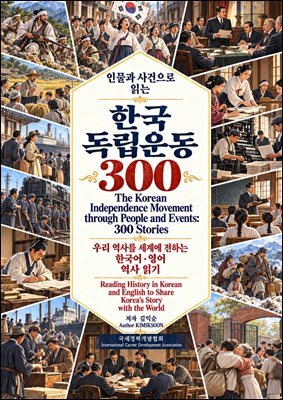
[eBook] 인물과 사건으로 읽는 한국 독립운동 300 _The Korean Independence Movement through People and Events: 300 Stories
- 글쓴이
- 김익순 저
- 출판사
- 국제경력개발협회
- 출판일
- 2026년 10월 27일
읽고있어요
다 읽었어요
읽고싶어요
책 소개
분야한국사
한국의 독립은 누구의 선택과 어떤 협력으로 준비되었을까요? 『인물과 사건으로 읽는 한국 독립운동 300』은 국권이 흔들리던 시기부터 광복과 귀환, 오늘날의 기록 읽기까지를 300개의 인물·사건 주제로 살펴보는 한국어·영어 병기 역사 교양서입니다. 15부·30장의 구성을 따라 전체 흐름을 읽거나, 관심 있는 인물과 사건을 찾아 읽을 수 있습니다.
이 책은 의병과 3·1운동, 대한민국임시정부, 독립군과 한국광복군의 활동을 다루면서 외교·교육·언론·노동·농민·학생·여성·문화·종교 운동으로 시야를 넓힙니다. 학교를 지킨 교사와 학생, 자금을 모은 상인과 노동자, 망명지의 생활을 꾸린 가족, 조직을 이끈 여성, 해외 동포와 외국인 협력자들의 활동을 함께 살핍니다. 이를 통해 독립운동을 지탱한 다양한 사람과 일상의 실천을 구체적으로 이해하도록 돕습니다.
각 글은 인물이 처한 시대적 조건, 행동과 선택, 그 결과를 역사 기록에 연결해 설명합니다. 선언서와 신문, 재판 문서와 편지, 사진과 회고록이 언제 어떤 목적으로 만들어졌는지 살피고, 당대 문서와 후대의 회고, 계획과 실행, 기록으로 확인되는 사실과 이후의 해석을 구분합니다. 광복에 이르는 과정에서도 독립운동의 지속과 국제정세, 전쟁의 종결을 함께 살펴 역사를 여러 관점에서 생각하도록 안내합니다.
한국어 본문과 대응하는 영어 본문은 한국사의 주요 장면을 두 언어로 읽고 설명하는 데 활용할 수 있습니다. 한국 독자뿐 아니라 한국어를 읽는 외국인과 영어 사용 독자도 인물과 사건에 관한 생각을 나눌 수 있도록 구성했습니다. 주제별 참고자료와 함께 읽으며 역사 이해를 넓히고, 우리 역사를 세계의 독자와 이야기하는 출발점이 되어 주는 책입니다.
Whose choices and cooperation helped prepare the way for Korean independence? The Korean Independence Movement through People and Events: 300 Stories is a Korean-English bilingual history book exploring 300 topics, from threats to national sovereignty through liberation and return to the reading of historical records today. Its 15 parts and 30 chapters allow readers to follow the broader historical course or select particular people and events.
The book examines righteous armies, the March First Movement, the Provisional Government of the Republic of Korea, independence forces, and the Korean Liberation Army, while extending its scope to diplomacy, education, journalism, labor, peasants, students, women, culture, and religion. It also considers teachers and students who sustained schools, merchants and workers who raised funds, families who maintained life in exile, women who organized, overseas Koreans, and international allies. These accounts help readers understand the diverse participants and everyday efforts that supported the movement.
Each account connects historical circumstances, actions, choices, and consequences with surviving records. Declarations, newspapers, court documents, letters, photographs, and memoirs are considered in relation to when and why they were produced. Contemporary documents are distinguished from later recollections, plans from completed actions, and documented facts from subsequent interpretations. The approach to liberation considers the continuing independence movement alongside international developments and the end of the war, encouraging readers to examine history from several perspectives.
Corresponding Korean and English texts support reading and explaining important episodes of Korean history in both languages. The book welcomes Korean readers, non-Korean readers who can read Korean, and English-speaking readers into a shared discussion of its people and events. Together with topic-specific references, it offers a starting point for deepening historical understanding and sharing Korea’s story with readers around the world.
전체 리뷰 (0)
최근 작성 순