- 리뷰
- 리스트
[eBook] 인물과 사건으로 읽는 대한민국 민주주의_Korean Democracy through People and Events
- 글쓴이
- 김익순 저
- 출판사
- 국제경력개발협회
- 출판일
- 2026년 10월 26일
읽고있어요
다 읽었어요
읽고싶어요
책 소개
분야한국사
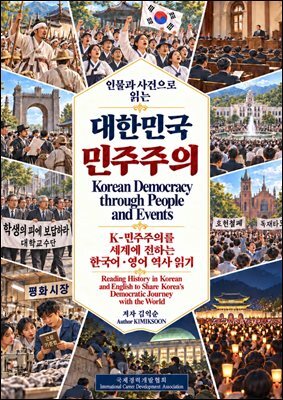
『인물과 사건으로 읽는 대한민국 민주주의』는 1894년 동학농민혁명부터 2025년의 헌정적 선택까지, 한국 사회의 변화를 274편의 인물과 사건으로 살펴보는 한영 대역서이다. 농민과 학생, 노동자와 여성, 지역 주민이 어떤 권리를 요구했는지, 그 요구에 국가기관과 사회가 어떻게 응답했는지를 따라간다. 민주주의를 한 방향으로만 발전한 역사로 설명하지 않고, 제도의 성취와 권리 침해, 갈등과 남은 과제를 함께 다룬다.
12부 58장으로 구성된 본문은 민권운동과 독립운동, 임시정부의 공화국 구상에서 출발해 해방과 제헌, 전쟁과 4·19혁명, 군사정변과 유신체제, 5·18민주화운동과 6월항쟁을 살펴본다. 이후 선거와 정당, 문민통제와 정권교체, 헌법재판과 공공기관, 지방자치와 주민참여를 주제별로 읽으며 민주주의의 제도와 운영을 이해하도록 구성했다.
민주주의의 문제는 일터와 학교, 언론과 생활공간으로도 이어진다. 노동권과 사회보장, 여성·장애인·성소수자·이주민의 평등, 표현과 집회의 자유, 환경과 미래세대의 권리, 참사 이후의 진실규명과 국가의 책임을 구체적인 사례로 설명한다. 법이나 제도가 마련된 시점과 그 권리를 사람들이 실제로 누릴 수 있게 된 과정도 구별해 살핀다.
마지막 부분은 촛불집회와 대통령 탄핵, 시민참여 공론화, 12·3 비상계엄과 헌법적 통제, 2025년 대통령선거를 다룬다. 이어 서로 다른 시기의 헌법과 개헌, 시민행동과 탄핵심판을 비교한다. 사건 당시의 주장과 이후 확인된 결과, 정치적 책임과 법적 판단을 구별하면서 권력을 견제하고 권리를 보장하는 조건을 생각하게 한다.
한국어 문단 뒤에 대응하는 영어 문단을 배치하고, 역사·정치·법률 용어를 사건의 맥락에서 설명하며 관련 기록과 기관으로 이어지는 링크를 제공한다. 중고급 한국어 학습자와 한국 사회를 이해하려는 청년·성인 독자가 두 언어를 대조해 읽고, 관심 있는 사건을 찾아보며, 자신의 질문으로 내용을 검토하는 데 활용할 수 있다.
Korean Democracy through People and Events is a Korean?English bilingual book exploring changes in Korean society through 274 accounts, from the Donghak Peasant Revolution of 1894 to the constitutional choices of 2025. It follows the rights claimed by farmers, students, workers, women, and local residents, and the responses of state institutions and society. Rather than presenting democracy as uninterrupted progress, it considers institutional achievements alongside rights violations, conflicts, and unfinished tasks.
Organized into 12 parts and 58 chapters, the book begins with movements for civil rights and independence and the provisional government's republican vision. It examines liberation, constitution-making, war, the April Revolution, military rule and the Yushin system, the May 18 Democratization Movement, and the June Uprising. Thematic sections then explore elections and parties, civilian control and transfers of power, constitutional review and public institutions, and local autonomy and resident participation.
Democratic questions also extend into workplaces, schools, the media, and everyday life. Cases address labor rights and social protection; equality for women, persons with disabilities, LGBTQ people, and migrants; freedom of expression and assembly; environmental and future generations' rights; and truth-seeking and state responsibility after disasters. The book distinguishes the introduction of laws and institutions from the processes through which people can exercise their rights in practice.
The final part considers candlelight protests, presidential impeachment, public deliberation, the December 3 martial law declaration and constitutional checks, and the 2025 presidential election. It then compares constitutions, constitutional amendments, civic action, and impeachment rulings across different periods. By distinguishing contemporary claims from subsequently established outcomes, and political accountability from legal judgments, it invites readers to consider the conditions needed to check power and protect rights.
Korean paragraphs are followed by their English counterparts. Historical, political, and legal terms are explained in context, with links to relevant records and institutions. Intermediate-to-advanced learners of Korean and young adult and other adult readers seeking to understand Korean society can compare the two languages, consult individual events, and examine the material through questions of their own.
전체 리뷰 (0)
최근 작성 순