- 리뷰
- 리스트
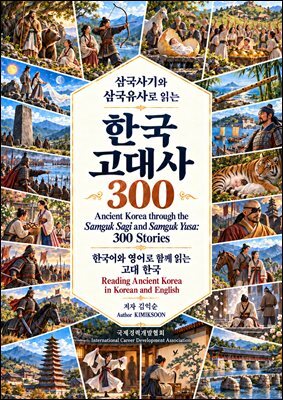
[eBook] 삼국사기와 삼국유사로 읽는 한국 고대사 300_Ancient Korea through the Samguk Sagi and Samguk Yusa: 300 Stories
- 글쓴이
- 김익순 저
- 출판사
- 국제경력개발협회
- 출판일
- 2026년 10월 27일
읽고있어요
다 읽었어요
읽고싶어요
책 소개
분야한국사
고대 한국의 역사는 왕의 즉위와 전쟁의 승패만으로 설명되지 않습니다. 나라가 시작되었다고 전하는 이야기에는 하늘에서 내려온 인물과 알에서 태어난 시조가 등장하고, 왕과 신하의 기록 뒤에는 가족을 돌보거나 낯선 세상을 찾아 떠난 사람들의 삶이 남아 있습니다.
『삼국사기와 삼국유사로 읽는 한국 고대사 300』은 고려시대에 편찬된 두 역사서를 바탕으로 고대 한국의 나라와 사람들을 300개의 이야기로 만나는 역사·문화 교양서입니다. 고조선과 부여의 건국 전승에서 출발하여 고구려·백제·신라·가야의 형성과 변화, 발해와 후삼국의 역사까지 살펴봅니다.
김부식 등이 편찬한 『삼국사기』와 일연의 저술을 중심으로 형성된 『삼국유사』는 서로 다른 관점과 서술 방식을 보여 줍니다. 이 책은 두 기록 가운데 어느 하나를 일방적으로 옳거나 그르다고 판단하지 않습니다. 기록이 무엇을 전하는지, 역사적으로 무엇을 확인할 수 있는지, 서로 다른 자료는 어떤 차이를 보이는지 설명합니다.
또한 왕과 장수뿐 아니라 여성과 아이, 승려와 장인, 노래를 지은 사람, 가족을 돌본 사람 등 다양한 인물의 삶을 함께 다룹니다. 신분의 제약과 전쟁의 피해, 신앙과 희망, 일상에서의 선택도 고대사를 이해하는 중요한 주제입니다.
모든 본문은 자연스러운 한국어와 그에 대응하는 영어를 문단별로 병기했습니다. 한국어 학습자는 역사와 사회에 관한 표현을 익히고, 한국인 독자는 익숙한 문화 이야기를 영어로 읽고 설명하는 경험을 얻을 수 있습니다.
300편의 이야기는 고대 한국을 하나의 고정된 모습으로 그리지 않습니다. 서로 다른 시대에 살아간 사람들이 남긴 기록과 기억을 통해 나라의 변화와 문화의 다양성을 살펴보도록 안내합니다.
The history of ancient Korea cannot be explained solely through royal successions and military victories. Founding traditions tell of figures descending from heaven and rulers emerging from eggs, while records of kings and officials also preserve glimpses of people who cared for their families or ventured into unfamiliar worlds.
Ancient Korea through the Samguk Sagi and Samguk Yusa: 300 Stories is a bilingual history and culture book that explores the kingdoms and people of ancient Korea through two historical works compiled during the Goryeo period. Beginning with the founding traditions of Gojoseon and Buyeo, it examines the formation and transformation of Goguryeo, Baekje, Silla, and Gaya, as well as the histories of Balhae and the Later Three Kingdoms.
The Samguk Sagi, compiled under the leadership of Kim Bu-sik, and the Samguk Yusa, shaped around the writings of Iryeon, offer different perspectives and narrative approaches. Rather than automatically treating one account as right and the other as wrong, this book examines what each source records, what historical evidence can establish, and how different accounts compare.
The book also explores the lives of people beyond kings and generals, including women and children, monks and craftspeople, poets, and those who cared for their families. Social restrictions, the suffering caused by warfare, religious beliefs, hopes, and everyday choices are all important to understanding ancient history.
Every Korean paragraph is accompanied by a corresponding English translation. Korean language learners can develop their understanding of historical and social expressions, while Korean readers can gain experience reading and explaining familiar cultural stories in English.
Across 300 topics, the book does not present ancient Korea as a single, unchanging society. Instead, it invites readers to explore political change and cultural diversity through the records and memories left by people living in different periods.
전체 리뷰 (0)
최근 작성 순