- 리뷰
- 리스트
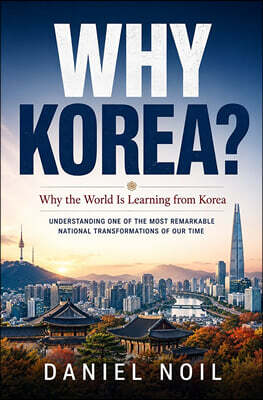
[eBook] WHY KOREA?
- 글쓴이
- 이노일
- 출판사
- 이페이지
- 출판일
- 2026년 11월 12일
읽고있어요
다 읽었어요
읽고싶어요
책 소개
분야인문/사회
PROLOGUE
Why Korea?
An encounter with Korea can begin without a journey: a song shared by a friend, a television series watched at home, a vehicle on the road, or a chip inside a device. Sometimes that encounter becomes curiosity?and a question:
Why Korea?
How did this country come to matter in so many settings? What connects its industrial achievements, educational ambitions, cultural reach, and everyday life?
Samsung, Hyundai, and BTS offer familiar starting points. Behind their visibility lie years of learning, investment, creative work, and international exchange. Understanding Korea means examining those processes and the people who sustained them.
This book follows a transformation shaped by colonial rule, division, war, reconstruction, industrialization, and political struggle. Its outcome was never assured. People learned from abroad, entered unfamiliar industries, encountered setbacks, and revised their approaches.
International assistance, technology, and overseas markets c-reated opportunities. Workers, families, businesses, and public institutions undertook the demanding work of using them. Their efforts give substance to a transformation often called a miracle.
Achievement brought tensions. Education widened opportunity while intensifying competition. Industrial growth c-reated skills and livelihoods alongside difficult working conditions and uneven rewards. Cultural success opened doors for creators through translation, distribution, and audiences who gave their work meaning abroad.
The chapters move from the Korea people encounter to the history and social arrangements behind it. Education, work, relationships, safety, speed, and innovation lead into accounts of companies, culture, and technology. Population aging, pressures on young adults, regional disparities, environmental demands, and international uncertainty bring its unfinished choices into view.
Throughout these pages, “Korea” refers primarily to the Republic of Korea, or South Korea. Division and the wider peninsula’s security concerns remain part of the setting.
Readers may enter through culture, business, education, technology, or public affairs. Following the connections can help them reconsider questions in their own societies: how people develop useful skills, how institutions learn, and how productive achievement improves daily life. Such comparison requires attention to circumstances, costs, and whose opportunities expand.
Korea’s story remains unfinished. Behind its brands and cultural successes are lives that no single account of national achievement can contain.
An ordinary encounter may have brought Korea to our attention. The chapters that follow ask what becomes visible when we look more closely.
전체 리뷰 (0)
최근 작성 순