- 리뷰
- 리스트
- 구매
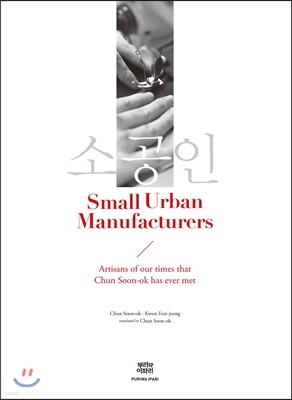
소공인 Small Urban Manufacturers
- 글쓴이
- Chun Soon-ok,Kwon Eun-jeong 공저/Chun Soon-ok 역
- 출판사
- 뿌리와이파리
- 출판일
- 2016년 4월 20일
읽고있어요
다 읽었어요
읽고싶어요
책 소개
분야인문
Who says manufacturing is a sunset industry?
The sewing machine is still running
Young assistant sewing machine operators who were working in the dust in sewing factories around Pyeonghwa Market in the 1970s have now entered middle age, but their sewing machines are still running in alleys around Changshin-dong or Seongsu-dong. Although they have had to endure harsh labor conditions throughout Korea’s industrialization process from the 1970s to 1980s while playing a part in the “Miracle on the Han River”, they have never received attention from society, nor have they benefited from government policies.
While most consider small manufacturing a dying industry, small manufacturers of clothing, handmade shoes, bags, glasses, jewelry and other accessories, and those engaged in printing services and metal processing have continued to grow in small steps. As a result, the number of small manufacturers today is about 300,000 across the country, with as many as 910,000 employees.
The work done by those small manufacturers employing no more than 10 workers is labor intensive and relies on highly-specialized skill sets, including fine manual skills. These businesses also tend to gather in certain areas. Chun Soon-ok, the author of this book, has dubbed them “small urban manufacturers”. For a long time, they have been collectively referred to as “microenterprises” together with small merchants. Now, however, they have finally received their own designation, small urban manufacturers, and have a distinct identity.
전체 리뷰 (0)
최근 작성 순